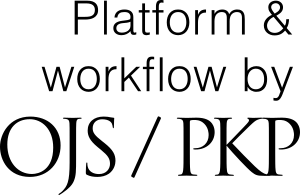
Towards science-based climate policy in Kerala: Integrating adaptation and mitigation for a climate-resilient future
DOI:
https://doi.org/10.64866/j.ijdscr.2026.10028Keywords:
Climate policy, Climate governance, Climate change adaptation, Climate resilience, Disaster risk reduction, Science-policy interfaceAbstract
Kerala has experienced a succession of climate extremes, including intense rainfall and heat stress, along with associated floods, landslides, and droughts, highlighting the urgent need to transition from uncoordinated climate responses to a science-based, integrated policy framework. Despite a growing body of scientific evidence documenting these trends, policy interventions remain inadequately aligned with empirical assessments and often lack consistency across sectors and scales. This perspective argues for embedding climate policy in robust scientific evidence, high-resolution climate datasets, and integrated vulnerability assessments that encompass both biophysical and socioeconomic dimensions. Drawing on observed climate variability, future projections, and recent climate-induced disasters, the study identifies critical gaps in data infrastructure, institutional coordination, climate finance, climate change impact assessments, and implementation capacity. It advances watershed-based planning as a scientifically grounded spatial unit for climate action and underscores the importance of systematic monitoring, climate auditing, and adaptive governance. Furthermore, the article advocates establishing a dedicated Climate Change Adaptation Cadre in the state to strengthen the science-policy-practice interface and facilitate effective decentralised implementation. Integrating mitigation, adaptation, and disaster risk reduction within a coherent governance framework is essential for advancing climate-resilient development in Kerala and other climate-vulnerable regions of the Global South.
Downloads
References
Abanda, F., Chia, E., Enongene, K., Fobissie, K., Manjia, M., Pettang, C., 2023. Catalysing the monitoring and evaluation of Nationally Determined Contributions through North-South cooperation. Environment, Development and Sustainability, 26, 8211–8234. https://doi.org/10.1007/s10668-023-03092-5.
Ajithkumar, B., Riya, K.R., 2022. Temperature Variation in Kerala: Present and Future. Int. J. Environ. Clim. Change 12, 1185–1195. https://doi.org/10.9734/ijecc/2022/v12i121558.
Ali, A.H., Thakkar, R., 2023. Climate changes through data science: understanding and mitigating environmental crisis. Mesopotamian Journal of Big Data, 2023, 125–137. https://doi.org/10.58496/MJBD/2023/017.
Alves, F., Filho, W., Casaleiro, P., Nagy, G., Díaz, H., Al-Amin, A., Guerra, J., Hurlbert, M., Farooq, H., Kļaviņš, M., Saroar, M., Lorencová, E., Jain, S., Soares, A., Morgado, F., O’hare, P., Wolf, F., Azeiteiro, U., 2020. Climate change policies and agendas: Facing implementation challenges and guiding responses. Environmental Science & Policy 104, 190–198. https://doi.org/10.1016/j.envsci.2019.12.001.
Antony, R., Kottayil, A., John, V.O., Satheesan, K., Xavier, P., 2025. Observational evidence of increasing intensity and frequency of deep convective clouds during the Indian summer monsoon season. Geophysical Research Letters 52, e2024GL111394. https://doi.org/10.1029/2024GL111394.
Brooks, N., 2003. Vulnerability, Risk and Adaptation: A conceptual Framework. Tyndall Centre for Climate Change Research Working Paper 38, 1–16.
Byg, A., Salick, J., 2009. Local perspectives on a global phenomenon -- climate change in Eastern Tibetan villages. Global Environmental Change 19, 156–166. https://doi.org/10.1016/j.gloenvcha.2009.01.010.
Chathukulam, J., 2024. Climate-resilient Governance: Nurturing Eco-friendly Public Srvices at the Grassroots in Kerala. Working Paper 23. (Abridged version published in UNISIA, vol. 42, No. 2).
College of Climate Change and Environmental Science, Kerala Agricultural University [CCCES-KAU], n.d. History - College of Climate Change and Environmental Science (CCCES). Available at: https://ccces.kau.in/accer/about/history (Accessed: 19 April 2026).
Cutter, S.L., 1993. Living With Risk: The Geography of Technological Hazards. Edward Arnold, London.
Das, J., Umamahesh, N., 2021. Heat wave magnitude over India under changing climate: Projections from CMIP5 and CMIP6 experiments. International Journal of Climatology 42, 331–351. https://doi.org/10.1002/joc.7246.
David Raj, A., Kumar, S., Sooryamol, K.R., 2022. Modelling climate change impact on soil loss and erosion vulnerability in a watershed of Shiwalik Himalayas. Catena 214, 106279. https://doi.org/10.1016/j.catena.2022.106279.
David Raj, A., Kumar, S., Sooryamol, K.R., 2024. Downscaling future precipitation with shared socioeconomic pathway (SSP) scenarios using machine learning models in the North-Western Himalayan region. Modeling Earth Systems and Environment 10, 6373–6395. https://doi.org/10.1007/s40808-024-02113-0.
David Raj, A., Sooryamol, K.R., Raj, A.D., 2021. Exploring temporal rainfall variability and trends over a tropical region using Tropical Rainfall Measurement Mission (TRMM) and Observatory data. Hydrospatial Analysis 5, 56–71. https://doi.org/10.21523/gcj3.2021050202.
Deshpande, M., Singh, V., Ganadhi, M., Roxy, M., Emmanuel, R., Kumar, U., 2021. Changing status of tropical cyclones over the north Indian Ocean. Climate Dynamics 57, 3545–3567. https://doi.org/10.1007/s00382-021-05880-z.
Di Gregorio, M., Fatorelli, L., Paavola, J., Locatelli, B., Pramova, E., Nurrochmat, D., May, P., Brockhaus, M., Sari, I., Kusumadewi, S., 2019. Multi-level governance and power in climate change policy networks. Global Environmental Change 54, 64–77. https://doi.org/10.1016/j.gloenvcha.2018.10.003.
DoECC, 2022. Kerala State Action Plan on Climate Change 2.0 (2023-2030). Directorate of Environment and Climate Change, Department of Environment, Government of Kerala.
DoECC, n.d. Climate Change. Directorate of Environment and Climate Change (DoECC). Available at: https://envt.kerala.gov.in/climate-change/ (Accessed: 17 April 2026).
Dow, K., Berkhout, F., Preston, B.L., 2013. Limits to adaptation to climate change: a risk approach. Current Opinion in Environmental Sustainability 5, 384–391. https://doi.org/10.1016/j.cosust.2013.07.005.
Fan, X., Ying, L., Ai-Min, L., Liu, L., 2020. Statistical and comparative analysis of tropical cyclone activity over the Arabian Sea and Bay of Bengal (1977-2018). Journal of Tropical Meteorology 26, 441–452. https://doi.org/10.46267/j.1006-8775.2020.038.
Gunaseelan, K., Drissia, T.K., 2024. Long-term variations of climate parameters in Kerala, in: Agarwal, A., Yadav, B., Nema, M., Sharma, M., Kumar, A. (Eds.), Towards Water Circular Economy. RWC 2024. Springer Proceedings in Earth and Environmental Sciences, Springer, Cham. https://doi.org/10.1007/978-3-031-60436-2_6.
Gupta, P., 2025. Comparative analysis of climate policies in Kerala and Sikkim: Alignment with the IPCC reports. Ind. J. of Landscape Systems and Ecological Studies 48, 114–124.
Hareesha, K., Ruby, S., 2025. Promoting sustainability: Best practices in waste management by Haritha Kerala Mission. Management Researcher 31.
Haridas, S., Manoj, M.G., 2025. How is the future climate linked to mean temperature changes over the west coast of India? Part-II: precipitation changes and drought severity from CMIP6 projections. Climate Dynamics 63, 263. https://doi.org/10.1007/s00382-025-07742-4.
Hong, H., Karolyi, G., Scheinkman, J., 2020. Climate Finance. The Review of Financial Studies 33, 1011–10. https://doi.org/10.1093/rfs/hhz146.
Hughes, S., Giest, S., Tozer, L., 2020. Accountability and datadriven urban climate governance. Nature Climate Change 10, 1085–1090. https://doi.org/10.1038/s41558-020-00953-z.
Institute for Climate Change Studies (ICCS), n.d. Vision and Mission. Available at: https://iccs.res.in/?page_id=6361&lang=en. (Accessed: 19 April 2026).
Intergovernmental Panel on Climate Change (IPCC), 2001. Climate Change 2001: The Scientific Basis. Contribution of Working Group I to the Third Assessment Report of the Intergovernmental Panel on Climate Change, Cambridge Univ. Press, New York, pp. 881.
Intergovernmental Panel on Climate Change (IPCC), 2007. Climate Change 2007: The Scientific Basis. Contribution of Working Group I to the Fourth Assessment Report of the Intergovernmental Panel on Climate Change, Cambridge Univ. Press, New York.
Intergovernmental Panel on Climate Change (IPCC), 2014. Annex II: Glossary [Agard, J. and E. L. F. Schipper, Eds.], in: Field, C.B., Barros, V.R., Dokken, D.J., Mach, K.J., Mastrandrea, M.D., Bilir, T.E., Chatterjee, M., Ebi, K.L., Estrada, Y.O., Genova, R.C., Girma, B., Kissel, E.S., Levy, A.N., MacCracken, S., Mastrandrea, P.R., White, L.L., Eds (Eds.), Climate Change 2014: Impacts, Adaptation, and Vulnerability. Part A: Global and Sectoral Aspects. Contribution of Working Group II to the Fifth Assessment Report of the Intergovernmental Panel on Climate Change. Cambridge University Press, Cambridge, United Kingdom and New York, NY, USA, 833–868.
Jernnäs, M., 2023. Governing through the nationally determined contribution (NDC): five functions to steer states’ climate conduct. Environmental Politics 33, 530 – 551. https://doi.org/10.1080/09644016.2023.2192146.
Kerala State Biodiversity Board, 2025. Kerala State Biodiversity Strategy and Action Plan (K-SBSAP) 2025-2035. Available at: https://keralabiodiversity.org/wp-content/uploads/2025/11/KBSAP-book.pdf (Accessed: 19 April 2026).
Klein, R.J., Eriksen, S.E., Næss, L.O., Hammill, A., Tanner, T.M., Robledo, C., O’brien, K.L., 2007. Portfolio screening to support the mainstreaming of adaptation to climate change into development assistance. Climatic Change 84, 23–44. https://doi.org/10.1007/s10584-007-9268-x.
Kumar, S., Chatterjee, U., David Raj, A., Sooryamol, K.R., 2024. Global warming and climate crisis/extreme events, in: Climate crisis: Adaptive Approaches and Sustainability. Springer Nature Switzerland, Cham, p. 3–18. https://doi.org/10.1007/978-3-031-44397-8_1.
Kumar, S., David Raj, A., Justin George, K., Chatterjee, U., 2025. Digital terrain analysis for characterization of terrain variables governing soil erosion and watershed hydrology. Surface, Sub-Surface Hydrology and Management: Application of Geospatial and Geostatistical Techniques, 469–490 https://doi.org/10.1007/978-3-031-62376-9_21.
Labban, A., Hasanean, H., Almahri, A., Al-Sakkaf, A., Hussein, M., 2024. Characterizing the tropical cyclones activity over Arabian Sea (1982-2021). Oceans 5, 840–856. https://doi.org/10.3390/oceans5040048.
Li, B., 2025. Promoting the effectiveness of climate policy through data analysis. Journal of Education, Humanities, and Social Research 2, 118–124.
Li, X., Li, Y., Tang, Y., 2025. Sharp Increase in rapid intensification of Arabian Sea tropical cyclones over the past decade. Communications Earth & Environment 6, 502. https://doi.org/10.1038/s43247-025-02477-w.
Mariappan, S., David Raj, A., Kumar, S., Chatterjee, U., 2023. Global warming impacts on the environment in the last century, in: Ecological Footprints of Climate Change: Adaptive Approaches and Sustainability. Springer International Publishing, Cham, p. 63–93. https://doi.org/10.1007/978-3-031-15501-7_3.
Ministry of Environment, Forest and Climate Change, 2025. Parliament Question: Climate Change Mitigation and Adaptation. 27 March 2026. Available at: https://www.pib.gov.in/Pressreleaseshare.aspx?PRID=2115837®=3&lang=2 (Accessed:16 April 2026).
Morrison, T., Adger, W., Brown, K., Lemos, M., Huitema, D., Hughes, T., 2017. Mitigation and adaptation in polycentric systems: sources of power in the pursuit of collective goals. Wiley Interdisciplinary Reviews: Climate Change 8. https://doi.org/10.1002/wcc.479.
Neeraj, S., Mannakkara, S., Wilkinson, S., 2021. Build back better concepts for resilient recovery: a case study of India’s 2018 flood recovery. International Journal of Disaster Resilience in the Built Environment 12, 280–294. https://doi.org/10.1108/IJDRBE-05-2020-0044.
Neriamparampil, C.C., 2018. Zero waste Kerala: An innovative model for waste management in India. Rajagiri Journal of Social Development 10, 65–76.
Newell, P., 2024. Towards a more transformative approach to climate finance. Climate Policy 25, 257–268. https://doi.org/10.1080/14693062.2024.2377730.
Pai, D., Thapliyal, V., Kokate, P., 2022. Decadal variation in the heat and cold waves over India during 1971-2000. MAUSAM 55, 281–292. https://doi.org/10.54302/mausam.v55i2.1083.
Pal, I., Al-Tabbaa, A., 2009. Trends in seasonal precipitation extremes-An indicator of ’climate change’ in Kerala, India. Journal of Hydrology 367, 62–69. https://doi.org/10.1016/j.jhydrol.2008.12.025.
Peake, S., Ekins, P., 2017. Exploring the financial and investment implications of the Paris Agreement. Climate Policy 17, 832–852. https://doi.org/10.1080/14693062.2016.1258633.
Pourkerman, M., Marriner, N., Amjadi, S., Lak, R., Hamzeh, M., Mohammadpor, G., Lahijani, H., Tavakoli, M., Morhange, C., Shah-Hosseini, M., 2023. The impacts of Persian Gulf water and ocean-atmosphere interactions on tropical cyclone intensification in the Arabian Sea. Marine Pollution Bulletin 188, 114553. https://doi.org/10.1016/j.marpolbul.2022.114553.
Reejo, R., Soumya, 2025. Climate change and temporal analysis of temperature and rainfall variability in Kerala. Journal of Geographical Research and Area Studies 1, 1.
Schoenefeld, J., Schulze, K., Bruch, N., 2022. The diffusion of climate change adaptation policy. Wiley Interdisciplinary Reviews: Climate Change 13, e775. https://doi.org/10.1002/wcc.775.
Singh, S., Mall, R., 2023. Frequency dominates intensity of future heat waves over India. iScience 26, 108263. https://doi.org/10.1016/j.isci.2023.108263.
Singh, S., Mall, R., Singh, N., 2020. Changing spatio‐temporal trends of heat wave and severe heat wave events over India: An emerging health hazard. International Journal of Climatology 41, 1831 – 1845. https://doi.org/10.1002/joc.6814.
Sooryamol, K.R., Kumar, S., Regina, M., David Raj, A., 2022. Modelling climate change impact on soil erosion in a watershed of north-western lesser Himalayan region. Journal of Sedimentary Environments 7, 125–146. https://doi.org/10.1007/s43217-022-00089-4.
Sreekumar, S., Ravindran, T.S., 2023. A critique of the policy discourse on primary health care under the Aardram mission of Kerala. Health Policy and Planning 38, 949–959. https://doi.org/10.1093/heapol/czad041.
Sreenath, A.V., Abhilash, S., Ajilesh, P.P., 2023. Changes in the dynamical, thermodynamical and hydrometeor characteristics prior to extreme rainfall events along the southwest coast of India in recent decades. Atmospheric Research 289, 106752. https://doi.org/10.1016/j.atmosres.2023.106752.
Sreenath, A., Abhilash, S., Vijaykumar, P., Mapes, B., 2022. West coast India’s rainfall is becoming more convective. npjClimate and Atmospheric Science, 5, 1–7. https://doi.org/10.1038/s41612-022-00258-2.
Su, J., Miao, C., Zwiers, F., Beck, H., Jones, P., Sun, Q., Slater, L.J., Berghuijs, W.R., Wada, Y., Rosenfeld, D., Gou, J., 2026. Precipitation observing network gaps limit climate change impact assessment. Nature, 1–7. https://doi.org/10.1038/s41586-026-10300-5.
Sudheer, K.P., Thomas, J., Jainet, P.J., Nizar, S., Beegum, S., Sebastian, D.E., Pai, D.S., 2023. From science to policy – Toward an approach linking extreme rainfall events to climate resilience and policy development: A case study from Kerala, India. Developments in Environmental Science 14, 143–172. https://doi.org/10.1016/B978-0-443-18640-0.00015-8.
Surendran, D.E., Sridhar, L., Kumari, A., Sreejith, O.P., Pai, D.S., 2020. Impact of climate change on the heavy rainfall events during June to September over Kerala (1901-2019). Current Science 119, 545–550. https://doi.org/10.18520/cs/v119/i3/545-550.
Tyagi, N., Dube, A., Lakshmi, S., Dutta, S., Srivastava, A., 2025. Shifting of the Zone of Occurrence of Extreme Weather Event-Heat Waves. International Journal of Climatology 45, e8856. https://doi.org/10.1002/joc.8856.
Valappil, N., Hamza, V., Júnior, J., 2022. Evaluation of daily average temperature trends in Kerala, India, using MERRA-2 reanalysis data: a climate change perspective. Environmental Science and Pollution Research 30, 26663–26686. https://doi.org/10.1007/s11356-022-23895-9.
Vijaykumar, P., Abhilash, S., Sreenath, A., Athira, U., Mohanakumar, K., Mapes, B., Chakrapani, B., Sahai, A., Niyas, T., Sreejith, O., 2021. Kerala floods in consecutive years: Its association with mesoscale cloudburst and structural changes in monsoon clouds over the west coast of India. Weather and Climate Extremes 33, 100339. https://doi.org/10.1016/j.wace.2021.100339.
World Bank, n.d. Climate Change Data. Available at: https://climateknowledgeportal.worldbank.org/country/india/climate-data-projections (Accessed: 10 March 2026).
World Meteorological Organization [WMO], 1994. Guide to Hydrological Practice, WMO-164. 1994.
Downloads
Published
Data Availability Statement
Data sharing is not applicable to this article as no new data were created or analysed in this study.
Issue
Section
License
Copyright (c) 2026 Anu David Raj, Melvin Manoj Abraham, Nandana Biju, Aju David Raj (Author)

This work is licensed under a Creative Commons Attribution 4.0 International License.
How to Cite